Heat-recovery ventilation in Bali: fresh air without the humidity, with less mould
Air-conditioned rooms are closed rooms. An energy-recovery unit brings in outdoor air and passes it by the outgoing air first, so the fresh air arrives cooler and drier and the AC does less work.
- Energy recovery (ERV) that exchanges both heat and moisture
- Balanced supply and extract, so rooms are not pressurised or sucked
- Filtered fresh air for bedrooms, living rooms and apart-hotel units
- Installed by us in Cemagi Villas and Hidden City Ubud
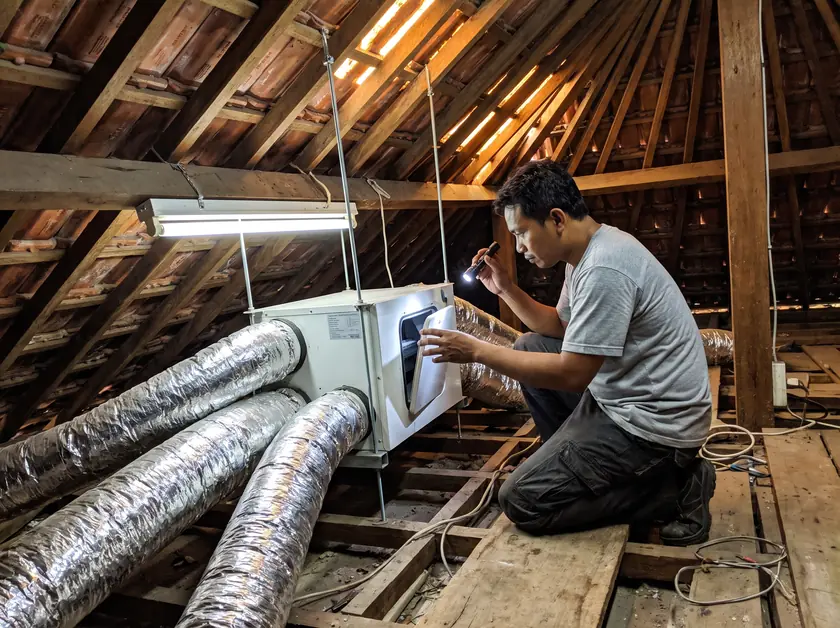
Closed rooms in a humid climate
In Bali people close the doors to keep the air conditioning in. Without fresh air, the room fills with the moisture of breathing, showers and cooking, the smell becomes stale, and mould appears behind wardrobes and in corners. Opening a window brings in hot, wet air that the AC then has to dry again.
A heat-recovery unit solves both. It supplies a steady flow of filtered outdoor air and extracts the same volume from bathrooms and kitchens. Inside the unit the two air streams pass each other through an exchanger. An energy recovery core moves not only heat but also part of the moisture from the incoming air to the outgoing air, which is what matters in the tropics.
| Exchanger type | Sensible effectiveness | Latent (moisture) effectiveness |
|---|---|---|
| Fixed plate | 50-75 % | none |
| Membrane plate (energy) | 55-75 % | 25-60 % |
| Enthalpy wheel | 65-80 % | 50-80 % |
| Heat pipe | 40-60 % | none |
Typical ranges from the 2020 ASHRAE Handbook, HVAC Systems and Equipment, chapter 26. In humid Bali the latent column is the one that matters.
What we deliver
- Airflow design per room from occupancy and extract points (bathrooms, kitchens, laundry).
- Unit selection with an enthalpy (energy) exchanger and filters, and access for filter changes.
- Insulated ducts with vapour barrier and quiet diffusers for bedrooms.
- Integration with the air conditioning so the two systems do not fight.
- Commissioning with measured supply and extract flows per room.
Ventilation with heat recovery is installed in Cemagi Villas and Hidden City Ubud. Ask us for the approach we used there.
Where it pays off
Villas with glazed, air-conditioned bedrooms; apart-hotels where units stay closed all day; offices and meeting rooms with many people. In open-air villas or rooms that are never air-conditioned, simple ventilation may be enough; we say so in the survey. More in our note on humidity and mould in villas.
It is far cheaper to route ventilation ducts at design stage than to cut ceilings later.
Questions owners ask us
Is heat recovery worth it in a hot climate?
Yes, when rooms are air-conditioned and closed: the energy exchanger pre-cools and partly dries incoming air, so the AC removes less heat and moisture.
Will it remove mould?
It removes the cause in most rooms: stale, humid air. Existing mould still needs cleaning, and leaks must be fixed first.
Can it be added to an existing villa?
Often, through a service loft or dropped ceiling in corridors and bathrooms. We check routes in the survey.
How often are filters changed?
It depends on dust and pollen at the site; we set the interval at commissioning and include it in maintenance.
Often ordered together
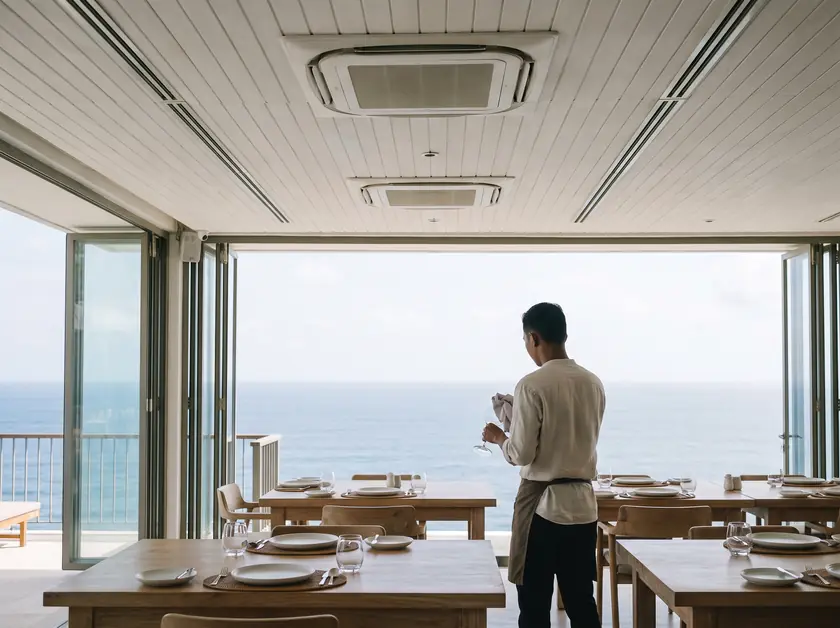
Ventilation and air conditioning
Fresh air and cooling for dining rooms, hotel rooms and offices, sized for Bali humidity.
Open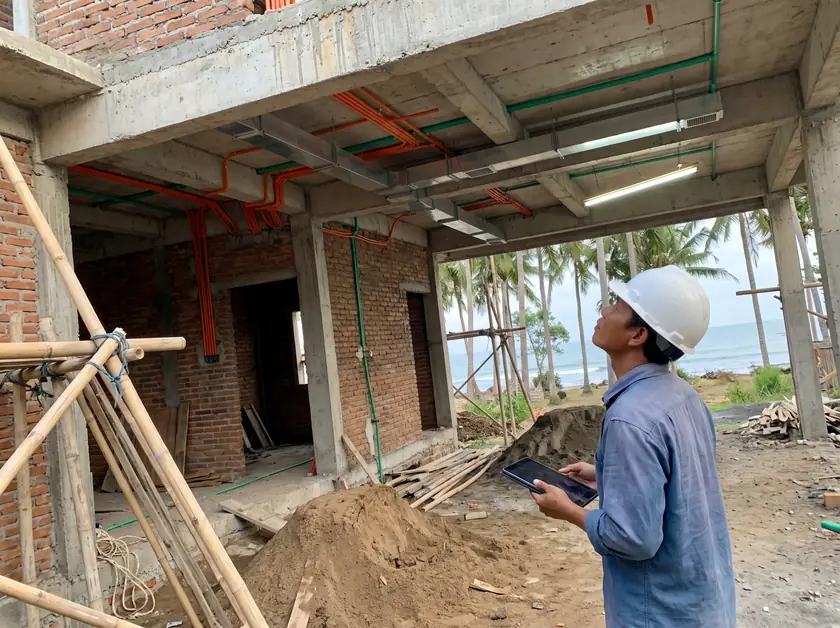
Villa complexes and developers
One design repeated across units: power, water, drainage, AC and fresh air planned from day one.
Open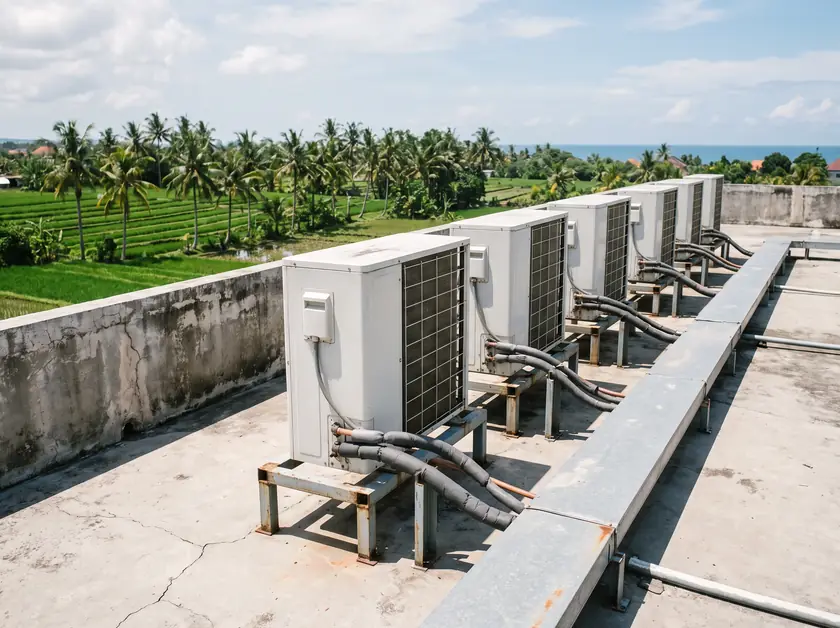
Hotels and apart-hotels
Quiet, dry rooms and hot water on demand: HVAC, fresh air, water and power for many units.
OpenDescribe the task, we answer on WhatsApp
Two ways to reach an engineer. Either one lands in the same WhatsApp chat.
Write it in your own words
A new restaurant, a kitchen that smokes, a hotel that needs air conditioning, a villa complex at design stage: a few lines are enough to start.