
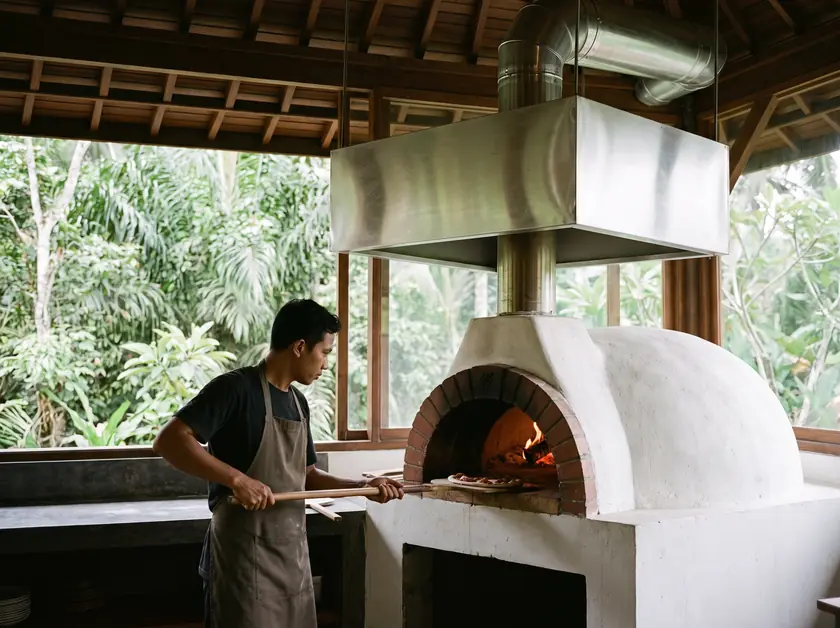
Wood-fired oven with its own hood
Solid-fuel ovens get a dedicated hood and flue, separate from the rest of the line.
Ask about thisKitchen exhaust with air balance, ventilation and air conditioning, electrical with spare capacity, water and drainage for restaurants, hotels and villa complexes. We model every system in Revit, install it with our own team and commission it until the kitchen runs clean at peak hour.
WhatsApp and calls: WhatsApp
A kitchen that smokes into the dining room, stuffy air, condensation on the ceiling and a difficult handover usually share one cause: systems drawn separately and fitted on site by trial and error.
of contract value saved through clash detection on BIM projects, in a Stanford study of 32 major projects. Coordination is cheaper on screen than in a ceiling.
Source: CIFE data (32 BIM projects) as reported by Azhar, Hein & Sketo, 2008of fires in eating and drinking establishments involve cooking equipment. Hood design and a cleaning schedule are fire safety, not decoration.
Source: NFPA, Structure Fires in Eating and Drinking Establishments (Campbell, 2017)is how much more energy per square foot restaurants use than other commercial buildings. Oversized fans and systems that fight each other show up on the PLN bill every month.
Source: ENERGY STAR for Small Business: Restaurants (US EPA)is the typical dew point of Bali air, month after month. Any duct, pipe or ceiling colder than that collects water unless it is insulated and sealed.
Source: NOAA GSOD, Ngurah Rai 97230, 2015-2024: monthly mean dew point 22.4-24.6 °CA beach club and an apart-hotel both need cooling, but at different hours, for different reasons and with different risks.

Open kitchens, beach clubs, bakeries: exhaust with air balance, power for the peak, grease traps.
Open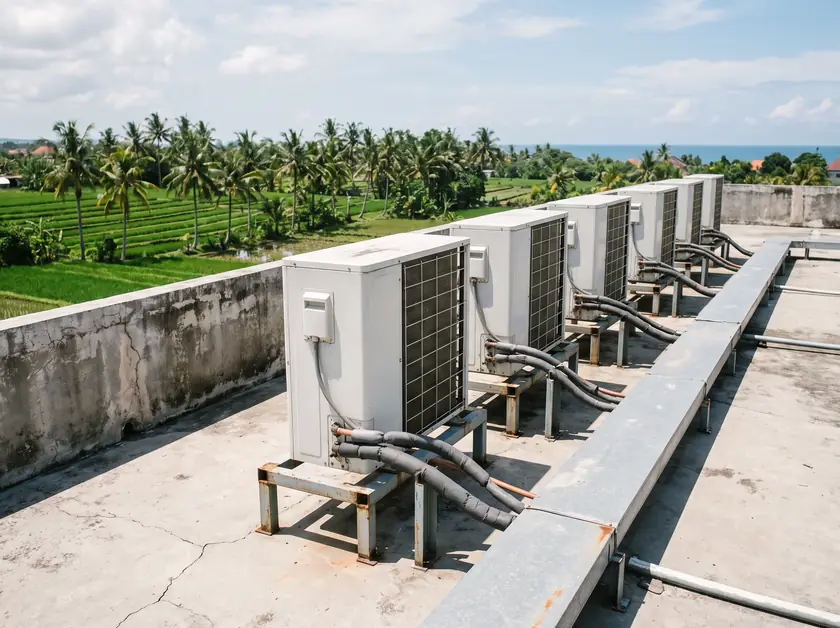
Quiet, dry rooms and hot water on demand: HVAC, fresh air, water and power for many units.
Open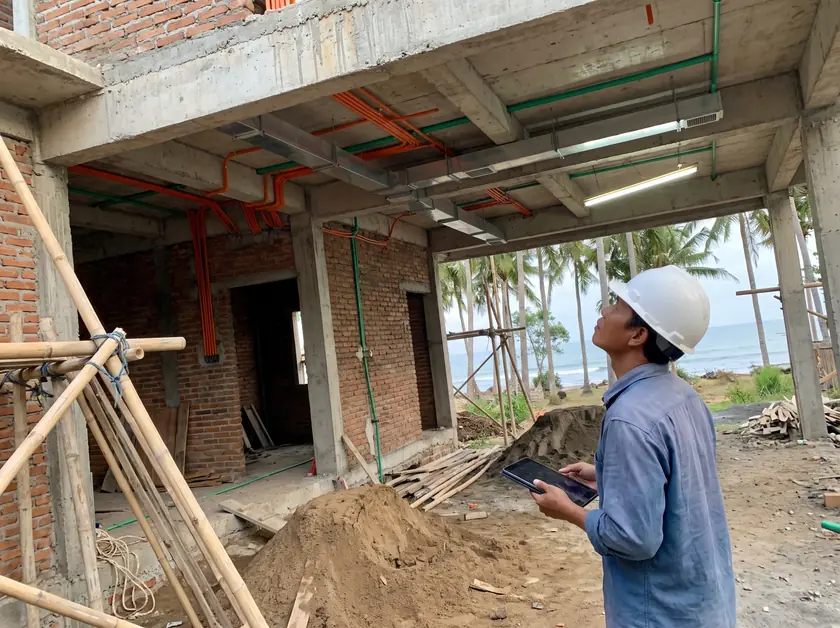
One design repeated across units: power, water, drainage, AC and fresh air planned from day one.
Open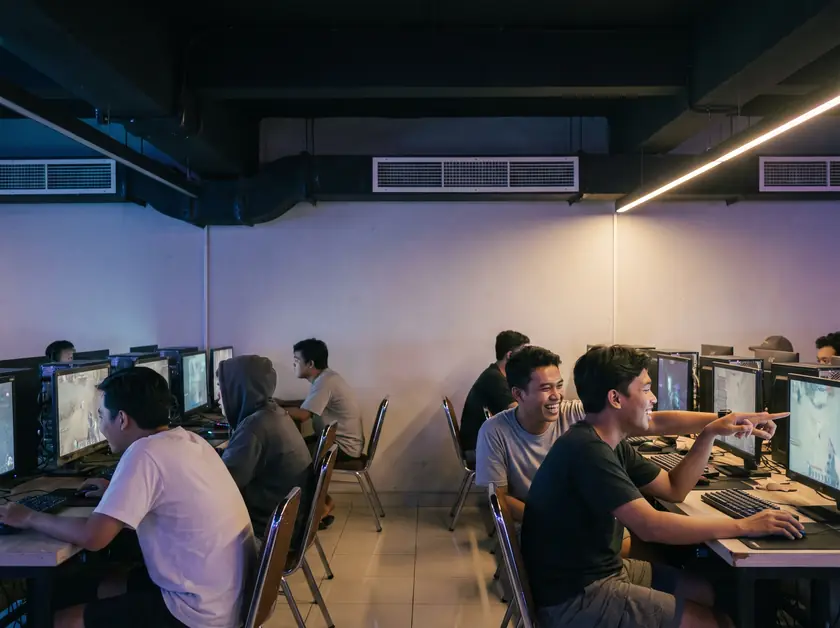
Computer clubs, beauty salons, lounges and offices: heat, fumes and people in one room.
OpenWe are MEP engineers working in Bali since 2024. Before the island, our key people spent 15+ years on projects where an engineering mistake is not an option. Here we bring the same discipline to restaurants, HoReCa and apart-hotels: one model, one team and one person responsible for the result.

Before Bali our engineers worked on Domodedovo Airport Terminal 2, an oncology diagnostics centre, shopping centres and four nuclear power plants: Novovoronezh II, Belarusian, Rooppur and Kola.
Design in Revit, supply, installation, commissioning and maintenance. Take the full package or only the part you need.
Hoods, ducts, fans, make-up air and air balance, so smoke and smell stay in the kitchen.
→M-201Fresh air and cooling for dining rooms, hotel rooms and offices, sized for Bali humidity.
→M-301Fresh air for closed rooms that does not bring Bali humidity and heat inside with it.
→E-101Load calculation, boards and circuits with spare capacity, so nothing trips at peak hour.
→P-101Cold and hot water, pumps, drainage and grease traps sized for a commercial kitchen.
→P-201Softening and filtration that protect coffee machines, combi ovens, dishwashers and ice makers.
→G-001All systems in one 3D model: clashes solved on screen, quantities straight from the model.
→G-101Every mode tested and airflows measured before handover: the proof that the design works.
→G-201Planned service for hoods, filters, air conditioning and electrical systems after opening.
→G-301Smoke in the dining room, a hot kitchen, condensation, tripping breakers: measured, then fixed.
→M-401Custom stainless hoods, ducts and interior structures made to the design, not to a catalogue.
→Typical solutions for Bali venues. Every card has its own WhatsApp button, so you can ask about exactly that option.
Solid-fuel ovens get a dedicated hood and flue, separate from the rest of the line.
Ask about this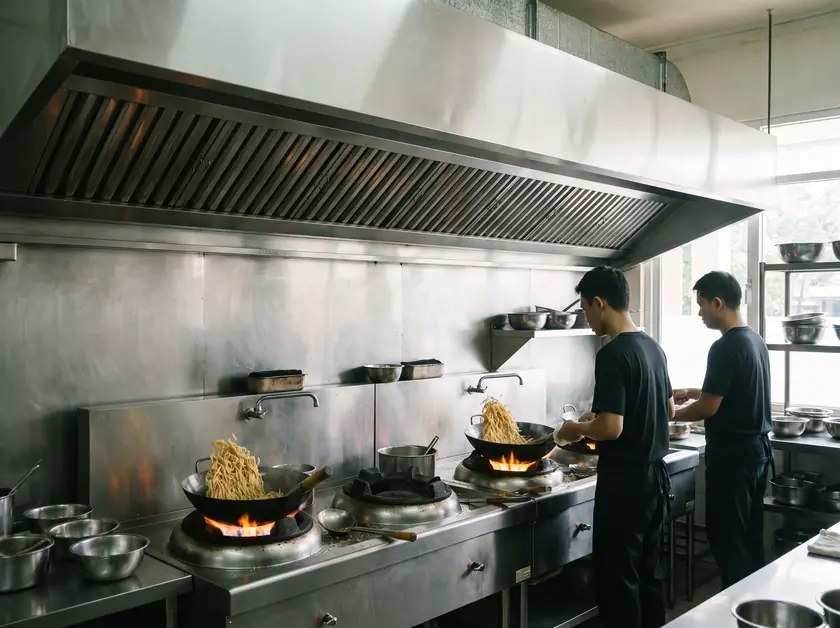
High-heat woks need generous overhang and airflow per metre; baffle filters catch the grease.
Ask about this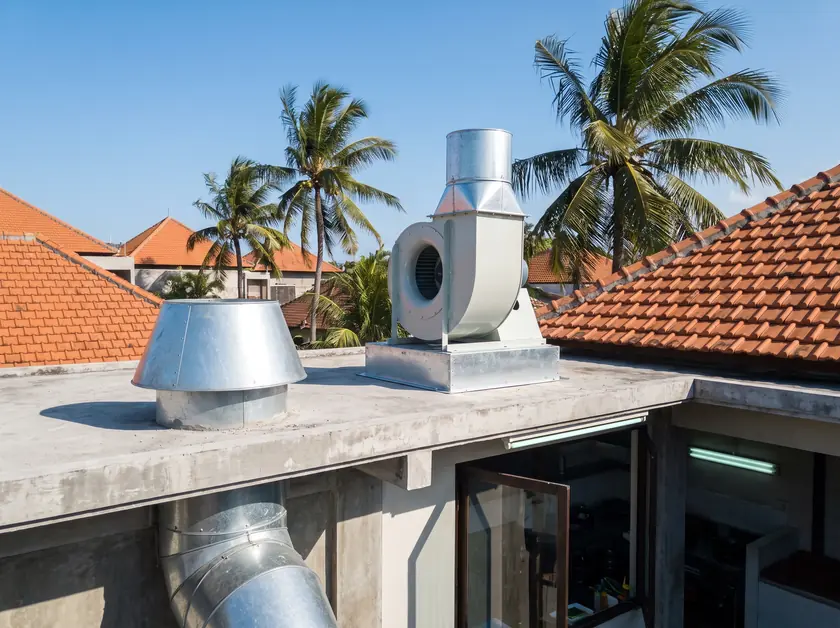
The plume goes up and away from neighbours and the make-up air intake; the fan stays serviceable.
Ask about thisOutdoor units grouped on the roof with covered pipe trays, instead of a unit on every balcony.
Ask about this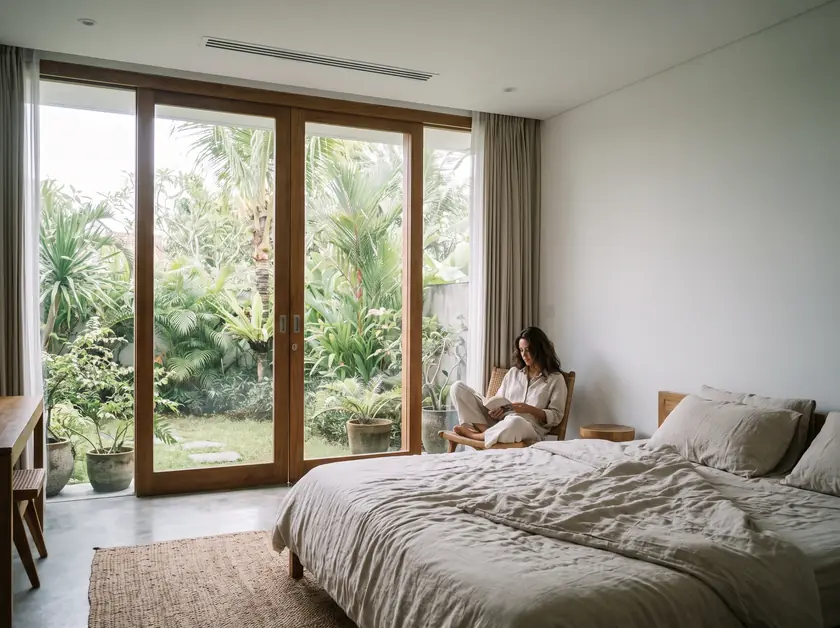
Slim ceiling diffusers fed by a heat-recovery unit: fresh, drier air with the doors closed.
Ask about this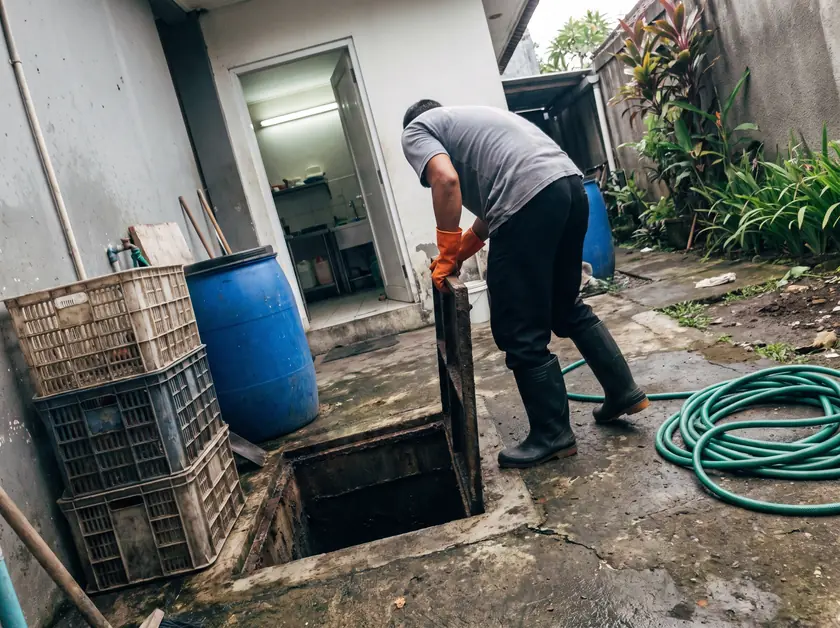
Sized for the kitchen flow and placed where the cleaning crew can reach it without closing service.
Ask about thisEnter the hood type, cooking line length, dining area and seats. Get exhaust, make-up and transfer air in m³/h, cooling capacity, a power estimate and an indicative budget, then send the result to our engineer in one tap.
Open the calculator →Sample result: 3 m wall hood, heavy-duty line, 120 m² dining, 60 seats
Eight steps. At each one you know what is being done, by whom and what it costs.
An engineer visits the site or reviews your drawings, measures and lists what the venue needs.
System choices with budget ranges: where the air goes, how much power you need, what can be reused.
All systems in one 3D model. Clashes are solved on screen; quantities come straight from the model.
Hoods, fans, AC units, boards, pumps and filters sized from calculations, with service support on the island.
Our own crews install every system. No chain of subcontractors between the drawing and the ceiling.
Every mode is tested: full cooking line, full dining room, night mode. Airflows are measured and balanced.
As-built drawings, settings and test results you can show at the SLF inspection and hand to your operator.
After launch we take the systems on maintenance: hoods and filters, air conditioning, electrical checks.
Payment is staged and tied to these steps; the schedule is written into the contract before work starts.
Indicative Bali prices for 2026. The exact figure comes after the free survey: two kitchens of the same size can need very different systems.
| Item | Indicative range, IDR | Unit |
|---|---|---|
| MEP design in Revit (BIM) All systems coordinated, drawings, quantities | Rp 60–150 thousand * | per m² of floor area |
| Kitchen exhaust, café Hood up to 2 m, duct, fan, make-up air, balancing | Rp 10–25 million * | per system |
| Kitchen exhaust, restaurant Hood line 3-5 m, duct to roof, fans, make-up air, balancing | Rp 25–60 million * | per system |
| Split air conditioner, installed Unit, standard piping, installation | Rp 4.5–7.5 million * | per PK |
| Grease trap SS304, installed | Rp 1.8–9 million | per unit, 50-300 L |
| Maintenance plan, restaurant or villa | Rp 1.5–5 million | per month |
Indicative ranges in IDR. Scope, materials and access decide the final quote.
Patterns we see in Bali venues. Most of them cost less to prevent in design than to repair after opening.
A selection of our Bali projects since 2024. Ask on WhatsApp for drawings and calculations from a project like yours.

Why open kitchens smell up the dining room, and how exhaust, make-up air and transfer air are balanced to stop it.
Read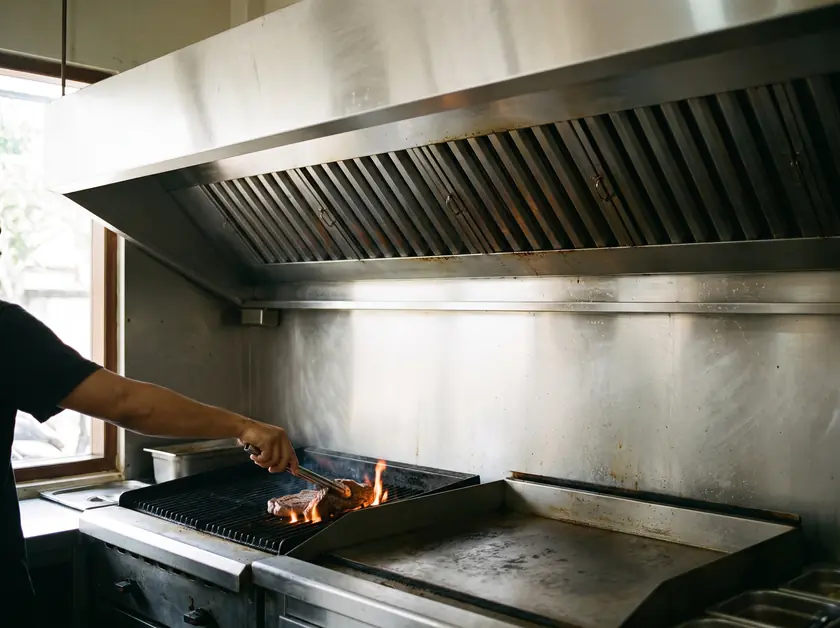
Code minimums converted to m³/h per metre of hood, with worked examples for wall, island and back-shelf hoods.
Read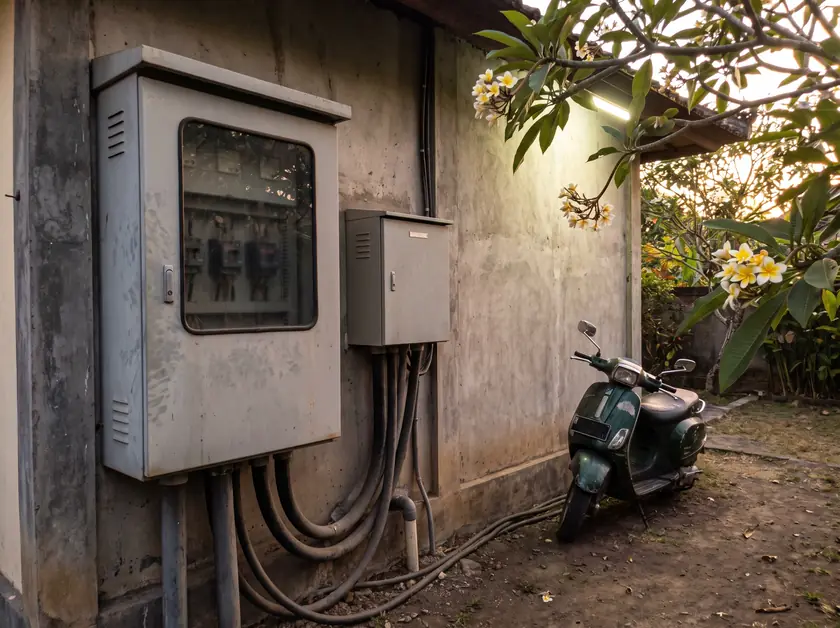
Why breakers trip at 8 pm, how to build a load list and turn kW into the right PLN step, with a worked 60-seat example.
ReadIf your question is not here, just ask it on WhatsApp.
Both. We design in Revit, supply the equipment, install every system with our own team, commission it and then maintain it. You can also order design only or an audit of an existing system.
It depends on hood length, cooking type and the duct route to the roof. See the indicative ranges or run the exhaust calculator. The survey and the estimate are free.
Yes. On request an engineer visits the site or reviews your drawings and prepares a cost estimate at no charge.
Yes. We start with measurements: airflows, pressures, temperatures, electrical loads. Then we propose the smallest change that solves the problem. See MEP audit.
Because ducts, pipes and cable trays compete for the same ceiling. A 3D model shows clashes before they are built, and quantities come from the model, so the estimate is transparent. More in Revit design.
We take the venue on service maintenance: hood and filter cleaning schedules, air conditioning service and electrical checks. See maintenance.
Our key specialists are in Bali and most projects are here. Projects elsewhere in Indonesia are discussed case by case.
Yes — beyond villa split units we are an HVAC contractor for Bali restaurants, gyms and boutique hotels: ducted systems, VRF, cold rooms and kitchen exhaust, with maintenance contracts that keep compressors alive through tropical peak season.
The villa questions we answer on WhatsApp every week: high ceilings, light sleepers, VRF budgets and maintenance contracts.
A villa is not a hotel room scaled up. Vaulted ceilings of four to six metres hold a cushion of hot air above the living area, glass walls add solar load by the hour, and the bedroom has to stay silent at 2 am. So every villa project starts the same way: a cooling load calculation per room, then unit selection by air throw and sound data at low fan speed, not by brochure BTU.
And it continues after handover. One team designs and installs the system, the same team maintains it on a schedule, so a villa manager never has to explain a rattling condenser to a guest at midnight.
With a 4–6 m vaulted ceiling the problem is stratification: cold air pools at floor level while the roof space stays hot. We size units from a room-by-room load calculation, pick indoor units by air throw so the jet actually reaches the seating area, and often pair them with ceiling fans that push the cold cushion back down.
Choose the indoor unit by its sound level at low fan speed, not by the cooling badge, and keep the condenser off the bedroom wall — on vibration mounts, out of the line of sight of the pillow. We also check the humidity side: an oversized unit cools fast, stops dehumidifying and the room feels clammy. More in our note on villa humidity.
For one or two bedrooms, individual splits win: cheaper, simpler, any technician can service them. From roughly six indoor units — a large villa or a villa complex — VRF starts to pay back: one condenser bank instead of a row of outdoor units, better part-load efficiency and central control. We put both options in one estimate so you compare them side by side.
Yes. A maintenance contract covers filter and coil cleaning, refrigerant and drain checks and a written log per unit, across a whole portfolio of villas. Guest complaints go to one WhatsApp line and are fixed before the checkout review is written.
Because the unit is cooling but not dehumidifying. Bali air has a dew point near 24 °C all year, and from November to March the indoor load is mostly moisture. An oversized split cools the room fast, cycles off and leaves the humidity behind; a unit sized from a room-by-room load calculation runs longer at low speed and dries the air. Closed bedrooms also need fresh air that has been dried first, which is what a heat-recovery unit does. Send the room sizes and unit models on WhatsApp and we check both.
The rainy season has started. Humidity, storms and power cuts find the weak points in a venue's systems; December and January add full dining rooms and full hotels.
Send photos of the hood, the roof and the main board, or a short video from the pass at peak hour, on WhatsApp. The survey and the estimate are free; existing systems go on a maintenance plan with hood and filter cleaning, AC service and electrical checks before the holiday weeks.
Two ways to reach an engineer. Either one lands in the same WhatsApp chat.
A new restaurant, a kitchen that smokes, a hotel that needs air conditioning, a villa complex at design stage: a few lines are enough to start.