Water supply, drainage and grease traps for commercial kitchens
Kitchens use a lot of water, drain hot fat and cannot stop when a pipe blocks. We design water supply, hot water, pumps and drainage with grease separation, so the kitchen keeps running and the drains stay open.
- Water demand and pump sizing for peak use
- Hot water sized for dishwashing and guest rooms
- Drainage with proper slopes, cleanouts and venting
- Grease traps sized for the kitchen, placed for cleaning
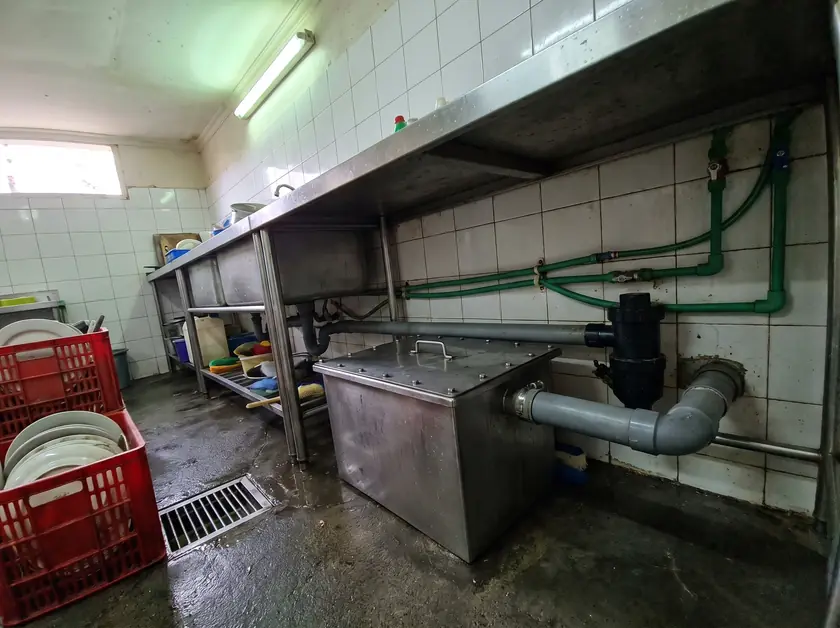
What goes wrong in restaurant drains
Fat that goes down a sink cools in the pipe, sticks and narrows it until the floor drain overflows during service. Undersized pumps drop the pressure when the dishwasher and the showers of the staff room run together. Hot water runs out halfway through the evening. None of this is visible on opening day; all of it is decided in the design.
What we design and install
- Cold water: storage, booster pumps and pipe sizes for peak demand.
- Hot water: generation and storage sized for dishwashing and guest use.
- Drainage: slopes, cleanouts, venting and separate lines where needed.
- Grease traps: sized from the kitchen's flow, placed where they can actually be cleaned.
- Connections for kitchen equipment, bars and coffee machines, with water treatment where the equipment needs it.
Grease traps: size and access
A grease trap works by slowing water down long enough for fat to float and solids to settle. Too small and fat passes straight through; placed under a counter nobody can open and it is never cleaned. We size it from the fixtures that drain into it and place it where the cleaning crew can reach it. The sizing logic and a cleaning routine are in our note on grease traps.
Tell us what drains into the trap and how often it is cleaned. Often the fix is size, position or a second stage.
In one model with everything else
Drain pipes need slope, which means height, which the ceiling rarely has spare. We route them in the same Revit model as the ducts and cable trays, so slopes are real and nothing is lifted on site. In our CUBE project we delivered water supply and drainage together with ventilation and air conditioning.
Questions owners ask us
What size grease trap does my restaurant need?
It depends on the flow from sinks and dishwashers and the menu. See our grease trap note; we size it from your fixture list.
How often should a grease trap be cleaned?
Often enough that fat and solids never fill a large part of its depth; busy kitchens need it far more often than cafés. We set a schedule in maintenance.
Do you install hot water systems for hotels?
Yes, as part of the hotel's water design, sized from rooms and kitchen use.
Can you fix drainage in an operating restaurant?
Yes, usually at night or on closed days, after an inspection.
Often ordered together
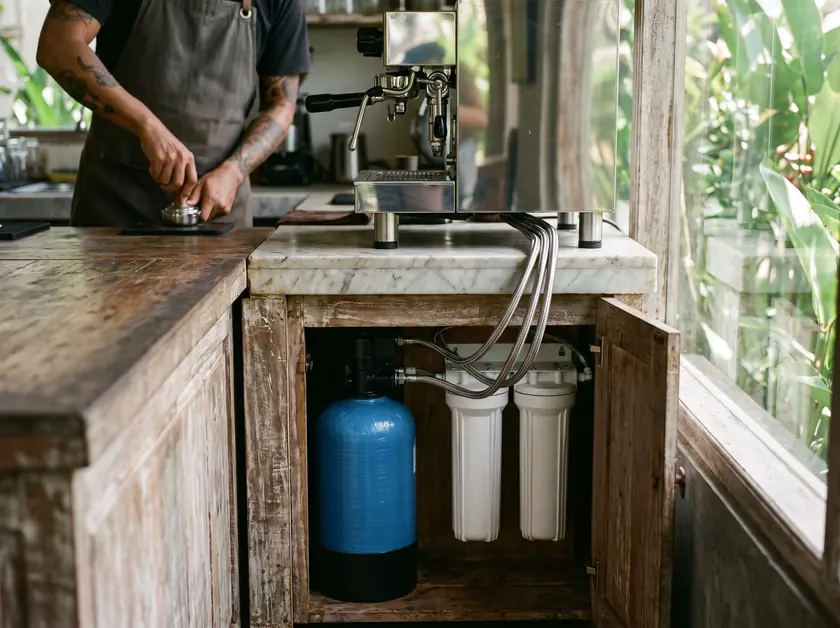
Water treatment for equipment
Softening and filtration that protect coffee machines, combi ovens, dishwashers and ice makers.
Open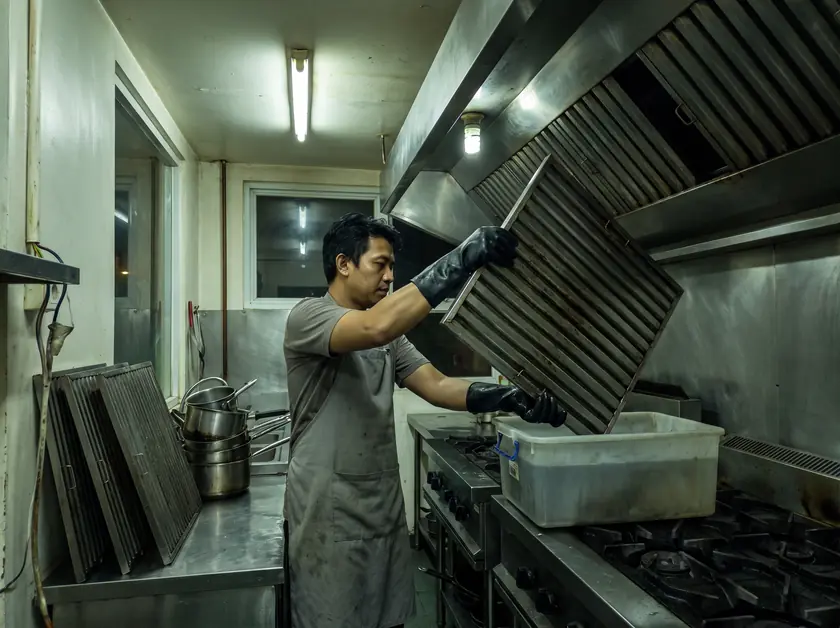
Maintenance after launch
Planned service for hoods, filters, air conditioning and electrical systems after opening.
Open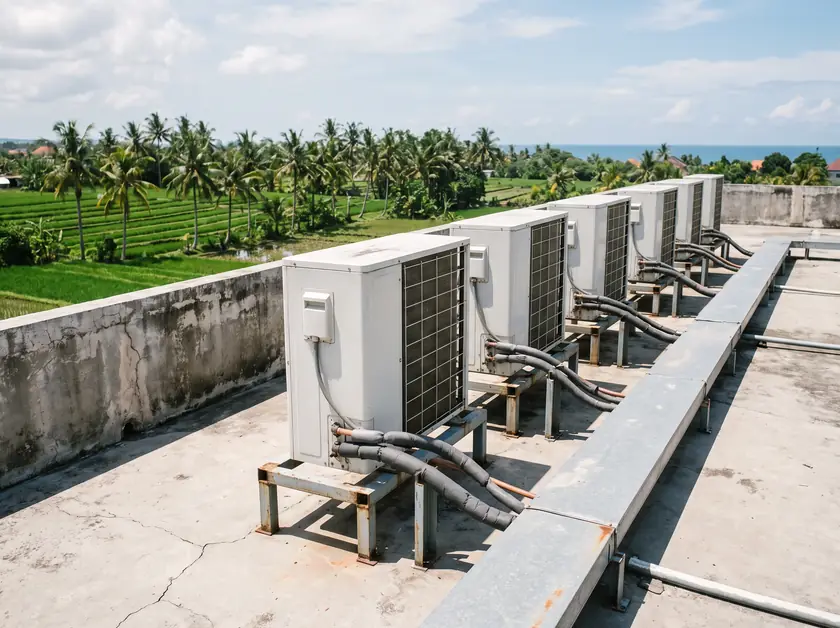
Hotels and apart-hotels
Quiet, dry rooms and hot water on demand: HVAC, fresh air, water and power for many units.
OpenDescribe the task, we answer on WhatsApp
Two ways to reach an engineer. Either one lands in the same WhatsApp chat.
Write it in your own words
A new restaurant, a kitchen that smokes, a hotel that needs air conditioning, a villa complex at design stage: a few lines are enough to start.